
I remember sitting in a glass-walled conference room during my final years at a Fortune 500 firm, staring at a mountain of recruitment paperwork. I watched my hiring managers toss aside dozens of perfectly “correct” applications because they were utterly forgettable. Most people think they need a flashy, color-coded design or a way to trick an algorithm, but that’s just noise. If you’re struggling with how to write a professional resume, you don’t need a designer; you need a strategy. Most candidates spend hours listing every mundane task they’ve ever performed, effectively turning their career history into a boring grocery list that tells me absolutely nothing about their actual impact.
I’m not here to give you a template that looks pretty but says nothing. My goal is to show you how to transform that document into a high-leverage tool that proves you are a problem solver, not just a task-doer. I’m going to share the exact frameworks I used to vet hundreds of leaders, cutting through the fluff to help you highlight your true value. We’re going to ditch the generic jargon and focus on building a narrative that actually commands respect from the moment it hits a recruiter’s desk.
The Strategic Shift Resume Summary vs Objective

Most people treat the top of their resume like a blank space to be filled with generic fluff. They use an “Objective” statement, which is essentially telling the hiring manager what you want from them. “Seeking a challenging role in a growing company” tells me absolutely nothing. It’s a waste of valuable real estate. If you want to stand out, you need to make a fundamental pivot in your professional resume structure.
Instead, I want you to lead with a Summary. Think of this as your high-level elevator pitch. While an objective focuses on your goals, a summary focuses on your value proposition—that’s just a fancy way of saying what you actually bring to the table. When comparing a resume summary vs objective, the summary wins every single time because it shifts the spotlight from your needs to the company’s problems. Use this space to highlight your biggest wins and the specific expertise that makes you the solution to their hiring headache. Stop asking for a chance and start proving you’re the right choice.
Mastering Professional Resume Structure for Impact

Think of your professional resume structure as the blueprint for a house. If the foundation is messy and the layout makes no sense, nobody is going to stay long enough to admire the interior design. You want to guide the reader’s eye exactly where you want it to go. Most people make the mistake of burying their best wins under a mountain of fluff. Instead, use a clean, reverse-chronological layout—that just means starting with your most recent job and working backward. This keeps the focus on who you are today, not who you were a decade ago.
When you’re building out your experience section, stop describing your job and start describing your impact. This is where most candidates stumble. Don’t just tell me you “managed a team”; tell me you “led a team of ten to exceed quarterly targets by 15%.” This is the art of quantifying job achievements. Use strong, punchy action verbs to drive each bullet point home. If you can’t attach a number, a percentage, or a specific outcome to a task, it’s probably just noise. You aren’t just listing duties; you are proving your worth.
5 Ways to Stop Being a Candidate and Start Being a Solution
- Stop listing your responsibilities and start proving your impact. I don’t care that you “managed a budget”; I want to know if you saved the company money or optimized how that money was spent. Use hard numbers—percentages, dollar amounts, or time saved—to turn a boring duty into a measurable win.
- Tailor your language to the specific problem the company is trying to solve. If a job description mentions “scaling operations,” don’t just say you “grew a team.” Use their language to show them you’ve already done exactly what they’re struggling with. It’s about showing alignment, not just listing skills.
- Kill the fluff and the “buzzword bingo.” Words like “synergy,” “go-getter,” or “detail-oriented” are empty calories; they take up space without providing any real nutritional value to your profile. If you say you’re a leader, prove it with a sentence about a team you mentored, rather than just claiming the title.
- Optimize for the “six-second scan.” Recruiters are human, and they’re usually exhausted. If they can’t find your biggest achievement within six seconds of looking at your page, you’ve lost them. Use clean white space and bold headers to guide their eyes exactly where you want them to go.
- Treat your skills section as a strategic toolkit, not a junk drawer. Don’t just throw every software program you’ve ever touched into a list. Group your skills into logical categories—like “Technical Leadership” or “Operational Strategy”—so a hiring manager can immediately see the specific value you bring to the table.
Moving From Paper to Purpose
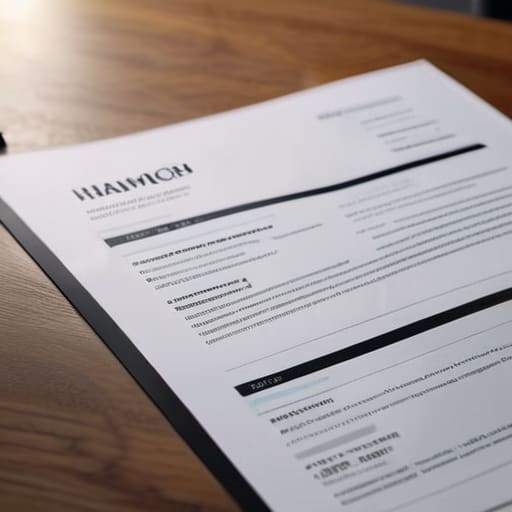
At the end of the day, a great resume isn’t about filling up white space or checking off every single duty you’ve ever performed. It’s about the strategy we discussed: ditching that outdated objective for a punchy summary and organizing your experience so your actual impact jumps off the page. Remember, you aren’t just a list of skills; you are a professional who solves specific problems. When you focus on your achievements rather than just your tasks, you stop being just another applicant and start becoming the solution a hiring manager is looking for.
I know that staring at a blank cursor can feel overwhelming, especially when you feel like your best work hasn’t been fully captured yet. But don’t let perfectionism stall your progress. Think of your resume like a vintage camera I’m restoring in my workshop—it might need some fine-tuning and a bit of patience, but once the mechanics are aligned, the picture it captures will be crystal clear. You have worked hard to build your expertise; now, give yourself the credit you deserve by showing up authentically on paper. Go out there and claim the seat at the table you’ve earned.
Now, I know that staring at a blank page can feel like trying to fix a jammed Leica shutter—frustrating and a little overwhelming. If you’re feeling stuck while trying to translate your wins into impactful bullet points, I’ve found that using a structured template can save you a massive amount of mental energy. It helps you focus on the substance of your achievements rather than fighting with margins and font sizes. While you’re refining your narrative, you might also find it useful to check out resources like shemales perth to see how different professional communities present themselves, but for your immediate needs, just focus on building a solid foundation that proves you aren’t just doing a job, but actually driving results.