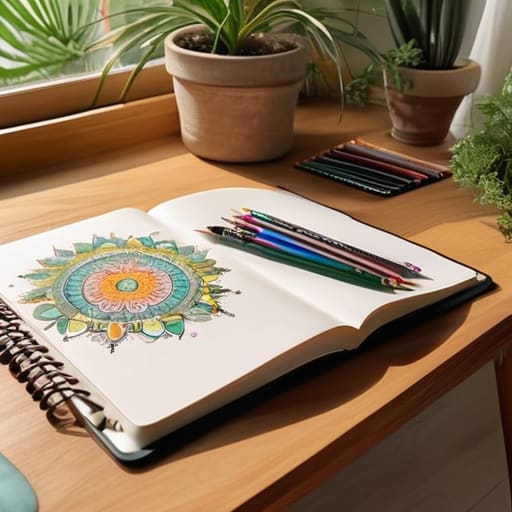
I remember sitting in a high-stakes boardroom in Chicago a decade ago, the air thick with tension and the hum of a dozen competing agendas. My notebook was open, but instead of taking minutes, I was lost in a frantic, swirling mandala of ink, trying to stop my brain from vibrating out of my skull. I realized then that all the executive leadership training in the world doesn’t matter if you can’t actually think through the noise. Most people think you need a mountain retreat or an expensive app to find peace, but I’ve learned that knowing how to practice mindfulness for mental clarity isn’t about escaping your life—it’s about learning how to stay present when your life gets messy.
I’m not here to sell you on some mystical, far-fetched concept that requires you to sit perfectly still for hours. Instead, I want to share the real-world, grit-tested strategies I’ve used with top-tier executives and myself to cut through the fog. We are going to explore practical, bite-sized rituals that fit into a hectic schedule, ensuring you can reclaim your focus without needing to quit your job or move to a monastery.
Daily Mindfulness Exercises for Stress Relief and Peace

I’ve always found that the most effective shifts don’t happen during a week-long retreat in the mountains, but in those tiny, quiet pockets of your regular Tuesday. When I was coaching executives through high-stakes mergers, I noticed that the most resilient leaders weren’t the ones with the most willpower, but the ones who had mastered simple daily mindfulness exercises for stress relief. One of my absolute favorites is the “5-4-3-2-1” method. It’s a fantastic way to use grounding techniques for mental clarity when you feel that familiar wave of panic rising. By simply acknowledging five things you see, four you can touch, and so on, you effectively pull your brain out of a future-based spiral and back into the present moment.
Another ritual I swear by—and one I often find myself doing while doodling mandalas during a particularly intense Zoom call—is mindful breathing paired with a simple sensory anchor. You don’t need a meditation cushion or an hour of silence; just three intentional breaths can act as a powerful tool for mindfulness for brain fog reduction. It’s about creating a small, sacred space in the middle of the chaos to remind yourself that you are still in control.
Grounding Techniques for Mental Clarity in Busy Moments

I remember a particularly high-stakes board meeting a few years back—the kind where the air feels heavy with unsaid tension and everyone is staring at their laptops. I could feel my heart racing, that familiar sensation of losing my grip on the present moment. In those split seconds, I’ve found that grounding techniques for mental clarity are far more effective than trying to force a full meditation session. One of my favorites is the “5-4-3-2-1” method. By silently noting five things you see, four you can touch, three you hear, two you smell, and one you can taste, you effectively pull your brain out of a spiral and back into your body.
It’s not just about calming nerves; it’s about improving cognitive focus through mindfulness when the pressure is on. Another trick I swear by is simply feeling the weight of your feet against the floor or the texture of a pen in your hand. These tiny, intentional anchors act as a circuit breaker for racing thoughts. When you use these quick methods, you aren’t just surviving the chaos—you are actively reclaiming your ability to think clearly and lead with intention.
Small Shifts for Big Clarity: My Personal Toolkit for Staying Present
- Curate Your Morning “Buffer Zone.” I used to jump straight from my alarm to my inbox, which is a recipe for instant anxiety. Now, I dedicate just ten minutes to sitting with my coffee—no phone, no news—just observing the quiet. It creates a mental reservoir you can draw from when the workday gets heavy.
- Practice “Single-Tasking” as a Form of Meditation. We often wear multitasking like a badge of honor, but in my coaching days, I saw it drain even the best leaders. Try picking one task—even something small like washing the dishes or writing an email—and give it your undivided attention. It trains your brain to stay in the “now” rather than racing toward the next deadline.
- Use Sensory Anchors During Transitions. Whenever I move from one meeting to another, or from my home office to my living room, I take a moment to name three things I can see and two things I can feel. It’s a quick way to shake off the residual stress of the previous task so you don’t carry it into your next interaction.
- Schedule “Mindful Micro-Breaks.” You don’t need an hour on a yoga mat to reset. I often find that even a sixty-second pause to focus solely on the sensation of my breath can act like a reset button. Think of it as a quick mental palate cleanser between the heavy lifting of your day.
- Embrace the “Non-Judgmental Observer” Mindset. When my thoughts start racing—and believe me, they do—I try not to fight them. Instead of getting frustrated, I imagine my thoughts are like clouds passing over a historic landscape. I acknowledge them, let them drift by, and gently bring my focus back to the present moment.
Your Journey Toward Clarity Starts Now

As we wrap up our exploration of these mindfulness tools, I want you to take a moment to reflect on how much ground you’ve already covered. We’ve talked about everything from intentional daily exercises to those quick grounding techniques that act as a lifeline when the boardroom—or just life in general—gets a bit too loud. Remember, the goal isn’t to achieve a state of perfect, permanent calm; that’s a myth. Instead, it’s about building a reliable toolkit that allows you to navigate the storms without losing your sense of self. Whether it’s a deep breath between meetings or a dedicated morning ritual, these small, consistent actions are what truly cultivate long-term mental clarity.
If I could leave you with one thought, it’s this: treat your mindfulness practice with the same respect you would give a high-stakes business strategy. It is an investment in your most valuable asset—yourself. I often think about the ancient ruins I’ve visited during my travels; they have stood the test of time because they were built on a solid, intentional foundation. Your mental clarity is no different. Don’t wait for the “perfect” moment to start being present, because that moment is right here, right now. I am so incredibly excited to see how you use these tools to unlock your next level of potential. You’ve got this!
Sometimes, when the mental fog feels particularly thick and those grounding exercises just aren’t cutting it, I find that simply breaking the isolation of my own thoughts can make all the difference. I’ve learned through years of coaching that we aren’t meant to navigate these internal storms entirely alone; often, finding a sense of connection or a safe space to express yourself is the most effective way to clear the air. If you’re feeling a bit adrift and need a way to engage with others from the comfort of your own space, finding a local chat in USA can be a wonderful way to reconnect with a sense of presence and remind yourself that you’re part of a larger, vibrant world.