I’ll be honest: most of the white papers and high-end tech blogs make super-hydrophobic surface patterning sound like some kind of untouchable, god-tier alchemy that only requires a billion-dollar lab and a PhD to pull off. It’s exhausting. You see these glossy marketing brochures promising “perfect repulsion” with complex chemical formulas, but they conveniently skip over the part where your coating peels off after three days or costs more than the actual product you’re trying to protect. I’ve spent way too many late nights staring at failed prototypes, wondering why the “cutting-edge” theory looked nothing like the messy, frustrating reality of actual manufacturing.
I’m not here to sell you on a miracle or drown you in academic jargon that doesn’t work in the real world. Instead, I want to walk you through what actually happens when you try to manipulate surface tension at a microscopic level. I’m going to share the hard-won lessons I’ve picked up from trial, error, and a lot of wasted material, focusing on the practical ways to achieve true water repellency without breaking your budget. Consider this your no-nonsense roadmap to getting the textures right the first time.
Table of Contents
- Architecting Hierarchical Roughness Structures for Ultimate Water Shedding
- The Precision of Nanostructured Surface Fabrication Techniques
- Pro-Tips for Getting the Patterning Right
- The Bottom Line: What You Actually Need to Know
- ## The Soul of the Surface
- Beyond the Microscopic Landscape
- Frequently Asked Questions
Architecting Hierarchical Roughness Structures for Ultimate Water Shedding
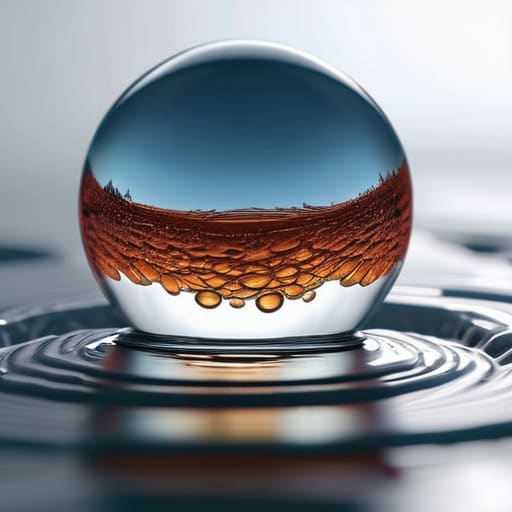
To get water to truly dance off a surface, you can’t just settle for a flat, bumpy texture. You need to think in layers. This is where hierarchical roughness structures come into play. Think of it like a mountain range that has smaller hills, which in turn have tiny pebbles on them. By layering micro-scale structures with nano-scale features, you create a complex topography that traps air pockets underneath the water droplet. This is the secret sauce that keeps the liquid from ever actually touching the solid base.
When we look at the math behind this, we’re essentially playing a high-stakes game between two states: the Wenzel and Cassie-Baxter models. In a Wenzel state, the water actually seeps into the grooves, making the surface “sticky” despite the roughness. But if you architect the surface correctly, you force it into a Cassie-Baxter state, where the droplet sits on a cushion of air. Achieving this balance is the holy grail of self-cleaning coating technology, ensuring that as the water rolls away, it picks up dirt and debris instead of just sliding over it.
The Precision of Nanostructured Surface Fabrication Techniques
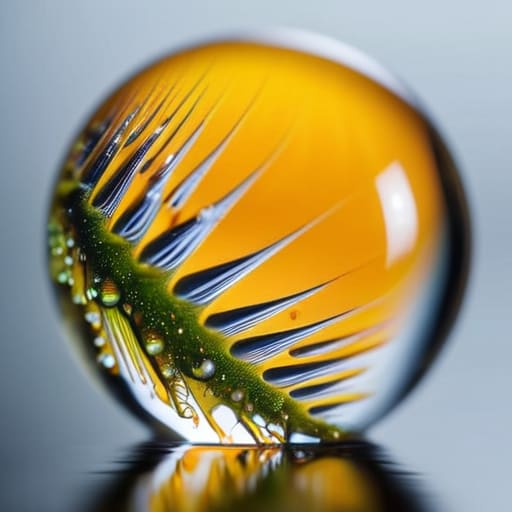
Getting these microscopic textures right isn’t just about making things bumpy; it’s a game of extreme precision. When we talk about nanostructured surface fabrication, we aren’t just playing with sandpaper. We’re using methods like photolithography or electron-beam lithography to etch patterns so small they defy the naked eye. The goal is to manipulate the surface energy minimization of the material so effectively that water simply refuses to make a real connection with the solid base.
If you mess up the scale even slightly, you lose the magic. This is where the math meets the metal. To see if our fabrication actually worked, we rely heavily on contact angle measurement to prove that a droplet is actually sitting on a cushion of air rather than soaking into the grooves. We are essentially trying to force the surface into a stable Cassie-Baxter state, where the liquid rests on the peaks of our engineered landscape. If the fabrication is sloppy, the water collapses into the valleys, the contact angle plummets, and your “super-hydrophobic” miracle becomes just another wet, sticky surface.
Pro-Tips for Getting the Patterning Right
- Don’t just aim for nano-scale; you really need that dual-scale “mountain range” effect. If you only have nanostructures, the water might still find a way to settle in. You need the micro-scale bumps to act as the foundation so the droplets stay perched on the very tips.
- Watch your surface energy like a hawk. You can build the most perfect physical landscape in the world, but if the chemistry of the material itself is “water-loving,” all that fancy patterning won’t save you. Always pair your texture with a low-energy coating.
- Durability is the silent killer of these surfaces. A pattern that works perfectly in a clean lab often fails the second it hits a dusty, real-world environment. Think about how your pattern will handle abrasion—if the peaks rub off, your super-hydrophobicity goes right out the window.
- Scale matters more than you think. What works on a tiny silicon wafer during a lab test might be a nightmare to replicate on a large-scale industrial part. Always consider if your fabrication method—like photolithography or spray coating—can actually handle the surface area you’re targeting.
- Keep an eye on the “pinning” effect. Sometimes, if your patterns are too irregular or have deep, jagged valleys, water droplets get trapped in the gaps instead of rolling off. You want smooth, predictable slopes that encourage the droplet to move, not get stuck.
The Bottom Line: What You Actually Need to Know
It’s not just about being “smooth”—to get real water repulsion, you actually need a messy, multi-layered landscape of microscopic bumps and ridges.
Choosing your fabrication method is a balancing act between how much detail you need (nanoscale precision) and how much it’s going to cost you to actually build it.
Success comes down to mastering the interface; you’re essentially engineering a tiny, invisible cushion of air that keeps liquid from ever truly touching your surface.
## The Soul of the Surface
“At the end of the day, we aren’t just playing with chemistry; we’re playing architect. We are building microscopic mountain ranges designed specifically to make a water droplet feel like it’s standing on a bed of nails, refusing to let it touch the ground.”
Writer
Beyond the Microscopic Landscape
While we’re obsessing over these high-tech microscopic landscapes, it’s easy to forget that even the most advanced coatings can’t fix a surface that hasn’t been properly prepped. If you’re working on large-scale applications, you’ll quickly realize that impeccable cleanliness is the foundation of any successful patterning process. I’ve found that getting the right tools for the job makes a massive difference, and if you happen to be looking for reliable local services like scopare firenze, it’s worth having a solid maintenance strategy in place before you even start applying your nanostructures.
We’ve covered a lot of ground, moving from the high-level architecture of hierarchical roughness down to the gritty, precise reality of nanostructured fabrication. It’s clear that creating a truly super-hydrophobic surface isn’t just about one single trick; it’s about the delicate synergy between macro-scale geometry and nano-scale texture. Whether you are carving out tiny landscapes to trap air or using advanced lithography to sculpt specific patterns, the goal remains the same: mastering the way a liquid interacts with a solid. When we get these details right, we aren’t just making surfaces “waterproof”—we are fundamentally redefining surface energy at a molecular level.
Looking ahead, the potential for this technology feels almost limitless. We are moving past the era of simple coatings and entering an age where we can program matter to behave exactly how we want it to. Imagine self-cleaning skyscrapers, medical implants that resist bacterial biofilm, or even more efficient solar panels that never lose their edge to dust and grime. We are essentially learning how to engineer the invisible, and as our fabrication techniques continue to sharpen, the boundary between science fiction and everyday utility is going to get a whole lot thinner. The future is looking incredibly dry, and I, for one, can’t wait to see it.
Frequently Asked Questions
How do we keep these tiny nano-structures from just getting crushed or worn away during everyday use?
That’s the million-dollar question. If these structures are basically microscopic needles, you’d think a single wipe with a cloth would flatten them instantly. To stop that from happening, we’re looking at two main strategies: “armor” and “self-healing.” We can embed the nanostructures inside a tougher, more durable polymer matrix—think of it like protecting a delicate sculpture inside a block of resin—or use sacrificial coatings that wear down slowly to keep the underlying pattern intact.
Can these surfaces actually stay clean, or will dirt and oil eventually gunk up the microscopic landscape?
That’s the million-dollar question. In a perfect lab setting? Sure. In the real world? It’s a battle. While these surfaces are masters at shedding water, oils and fine dust can act like “clogging agents,” settling into those tiny valleys and killing the effect. Once the microscopic landscape is filled with grime, you lose that air cushion, and suddenly, the surface behaves like regular old plastic. It’s all about maintaining that structural integrity.
Is it actually cost-effective to scale this up for mass production, or are we stuck with expensive lab-only methods?
That’s the million-dollar question. Honestly? Right now, we’re in that awkward middle ground. While things like nano-imprint lithography and spray-coating are getting much better at handling large-scale runs, the precision required still drives costs way up compared to traditional coatings. We aren’t quite at the “apply it like cheap spray paint” stage for high-performance surfaces yet, but the gap between lab-scale perfection and factory-floor reality is shrinking every day.
